A Comprehensive Guide to Leading Organizational Transformations
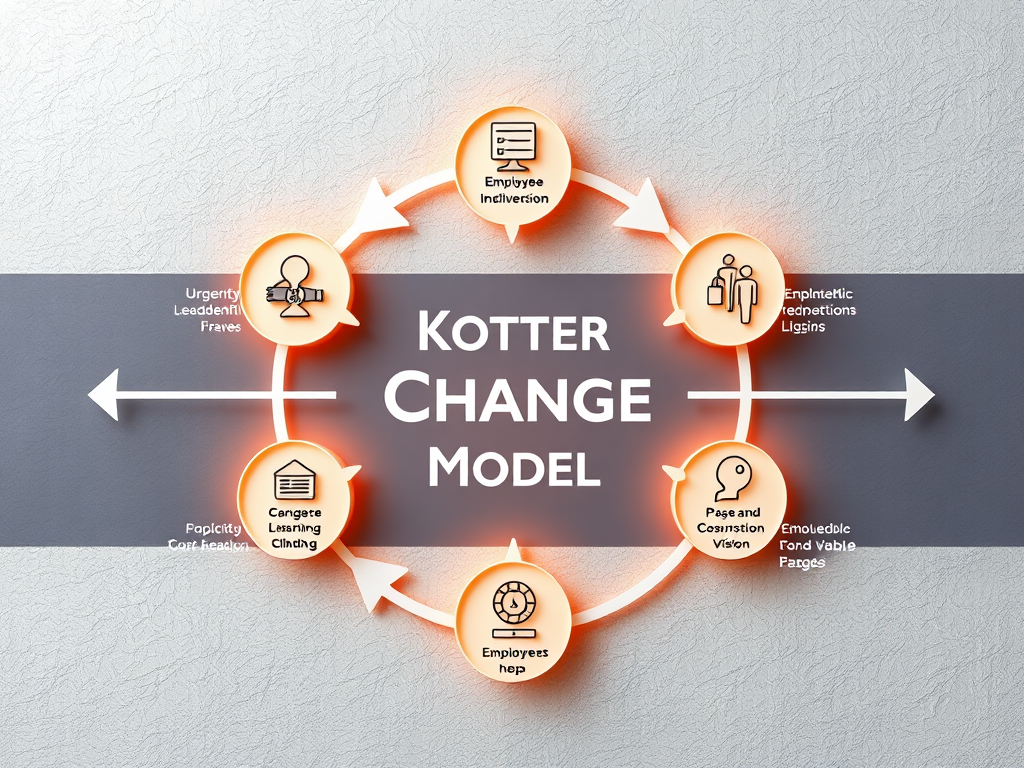
Organizational change can be a daunting task, often met with resistance, uncertainty, and ultimately, failure. However, with a structured approach and strong leadership, organizations can navigate transitions effectively and achieve their strategic goals. One such approach is Kotter’s 8-Step Change Model, a widely recognized and comprehensive framework for leading organizational transformations.
If you want an in-depth dive and some downloadable content, along with other models by Kotter: Kotter Inc
We have summarized the model here for you.
What is Kotter’s 8-Step Change Model?
Developed by Harvard Business School professor John Kotter, this model provides a detailed, step-by-step process for implementing change initiatives. It emphasizes the importance of creating a supportive environment, engaging employees, and sustaining momentum throughout the change process. Unlike simpler models, Kotter’s 8-Step Model focuses on creating a culture of change, rather than just implementing a single project.
The 8 Steps to Successful Change:
Let’s break down each step of the model in detail:
1. Create a Sense of Urgency:
- Why it’s Important: Change initiatives are more likely to succeed when employees feel a compelling need for change.
- Key Activities:
- Identify potential threats and highlight existing opportunities.
- Initiate honest discussions and provide convincing reasons to act.
- Request support from customers, external stakeholders, and industry experts to strengthen your argument.
- Example: A retail company facing declining sales due to online competition might present data showing market share loss and potential financial repercussions to create a sense of urgency.
2. Build a Guiding Coalition:
- Why it’s Important: No one can lead a major change alone. You need a team of influential individuals to champion the initiative and drive it forward.
- Key Activities:
- Identify true leaders within your organization and key stakeholders.
- Ask for an emotional commitment from these key people.
- Create a team that has the right blend of skills, credibility, connections, authority, and leadership.
- Example: The retail company might assemble a team consisting of the CEO, CFO, VP of Marketing, and a few influential store managers to guide the transformation.
3. Form a Strategic Vision and Initiatives:
- Why it’s Important: A clear and compelling vision provides direction and motivates employees to embrace the change. Initiatives are the tangible projects that will achieve the vision.
- Key Activities:
- Create a vision to help direct the change initiative.
- Develop the strategies for realizing that vision.
- Ensure the guiding coalition can describe the vision simply and can act as a role model.
- Example: The retail company’s vision might be “To become the leading omnichannel retailer in the region,” with initiatives such as launching a new e-commerce platform, improving in-store customer experience, and integrating online and offline marketing efforts.
4. Enlist a Volunteer Army:
- Why it’s Important: A large group of committed individuals will amplify the impact of the guiding coalition and accelerate the change process.
- Key Activities:
- Communicate the vision and strategy widely.
- Empower broad-based action.
- Get rid of obstacles.
- Generate short-term wins.
- Example: The retail company might encourage employees from all departments to participate in the change initiative by forming cross-functional teams, soliciting ideas, and empowering them to implement improvements.
5. Enable Action by Removing Barriers:
- Why it’s Important: Obstacles can hinder progress and demoralize employees. Identifying and removing these barriers is crucial for enabling action.
- Key Activities:
- Identify and remove obstacles to change, such as inefficient processes, outdated systems, or unsupportive policies.
- Encourage risk-taking and unconventional ideas.
- Empower employees to take ownership of the change and make decisions without fear of failure.
- Example: The retail company might streamline decision-making processes, invest in new technology, and revise performance metrics to align with the new omnichannel strategy.
6. Generate Short-Term Wins:
- Why it’s Important: Short-term wins provide evidence that the change initiative is making progress, boosting morale and sustaining momentum.
- Key Activities:
- Plan for and create short-term “wins.”
- Visibly recognize and reward people who are making the wins possible.
- Choose sure-fire projects to realize initial success and build momentum.
- Example: The retail company might launch a pilot program to improve in-store customer service, track customer satisfaction scores, and celebrate the positive results with the team.
7. Sustain Acceleration:
- Why it’s Important: It’s tempting to declare victory after achieving some initial success, but it’s important to keep the momentum going and drive further improvements.
- Key Activities:
- Analyze what went right and wrong.
- Pursue relentless improvement.
- Don’t let up – keep pushing forward with bolder and bigger changes.
- Foster and encourage determination and persistence.
- Example: The retail company might continue to refine its omnichannel strategy based on customer feedback and performance data, identifying new opportunities for improvement and expansion.
8. Institute Change:
- Why it’s Important: To make change sustainable, it must become ingrained in the organization’s culture.
- Key Activities:
- Articulate the connections between the new behaviors and organizational success.
- Develop methods to ensure leadership development and succession.
- Reinforce the value of those methods.
- Example: The retail company might integrate its omnichannel strategy into its core values, training programs, and performance management system, ensuring that it becomes a fundamental part of the company’s identity.
Workplace Example: Implementing a Remote Work Policy
Let’s consider a company transitioning to a remote work policy.
- Create a Sense of Urgency: Highlight the benefits of remote work (increased employee satisfaction, reduced office costs, access to a wider talent pool) and the potential disadvantages of not adapting to this trend.
- Build a Guiding Coalition: Assemble a team of managers, HR representatives, and IT professionals to guide the implementation of the remote work policy.
- Form a Strategic Vision and Initiatives: Define a clear vision for the remote work policy (e.g., “To create a flexible and productive work environment that attracts and retains top talent”) and develop initiatives such as providing remote work training, implementing collaboration tools, and establishing clear communication protocols.
- Enlist a Volunteer Army: Encourage employees from all departments to participate in the development and implementation of the remote work policy.
- Enable Action by Removing Barriers: Address concerns about technology, communication, and performance management, providing resources and support to ensure a smooth transition to remote work.
- Generate Short-Term Wins: Celebrate successful remote work arrangements, highlight productivity gains, and share positive feedback from employees.
- Sustain Acceleration: Continuously refine the remote work policy based on employee feedback and performance data, identifying new opportunities for improvement.
- Institute Change: Integrate the remote work policy into the company’s culture, values, and performance management system, ensuring that it becomes a sustainable part of the organization.
Benefits of Kotter’s 8-Step Model
- Comprehensive: The model provides a detailed, step-by-step approach to managing change.
- People-Centric: The model emphasizes the importance of engaging and supporting employees throughout the change process.
- Sustainable: The model focuses on creating lasting change that becomes ingrained in the organization’s culture.
Limitations of Kotter’s 8-Step Model
- Time-Consuming: The model can be time-consuming and resource-intensive to implement.
- Linearity: The model assumes a linear process, which may not always be the case in complex change initiatives.
- Top-Down Approach: The model can be perceived as a top-down approach, which may not be suitable for all organizations.
Conclusion:
Kotter’s 8-Step Change Model offers a valuable framework for leading organizational transformations effectively. By following these steps, organizations can increase the likelihood of success and achieve their strategic goals. While the model may require significant time and resources to implement, the long-term benefits of creating a culture of change are well worth the investment. Remember that effective communication, employee engagement, and strong leadership are essential for navigating the complexities of change and achieving lasting results.



Leave a Reply